In defence of organising
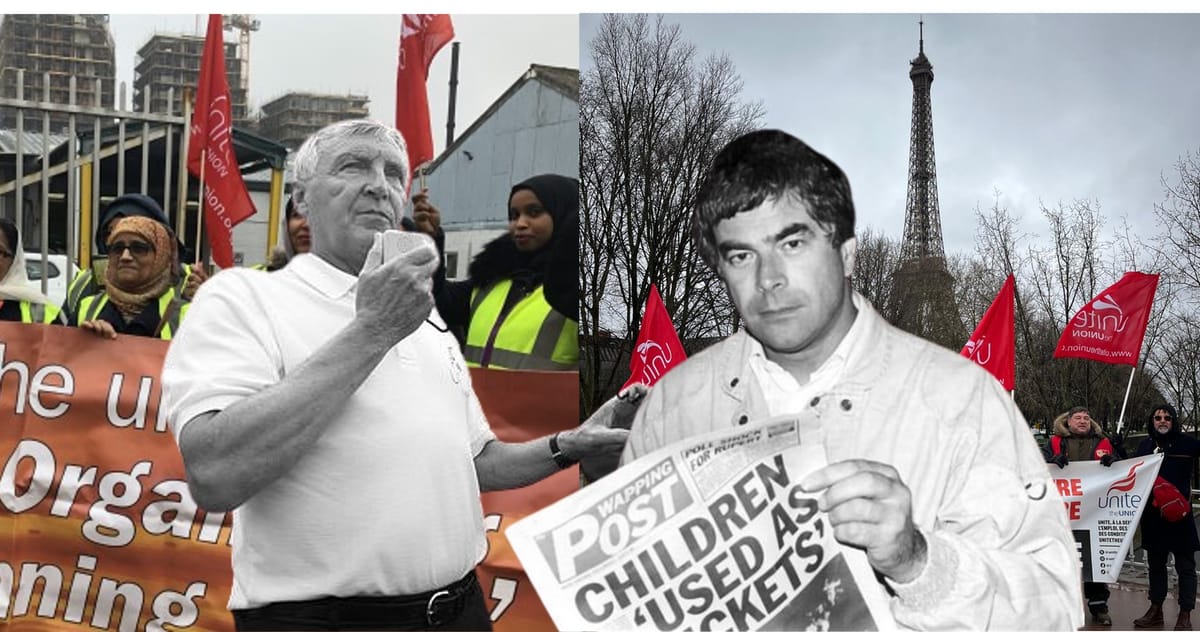
It is a grim and unexpected irony that Unite’s hard earned reputation as the organising union in the UK is being trashed by the supposed “Organising General Secretary” Sharon Graham. From Port Talbot to Veolia, in recent years our union’s Organisers have been steadily reduced to underappreciated and misused banner wavers and props for social media content. We must Reunite in defence of Organising.
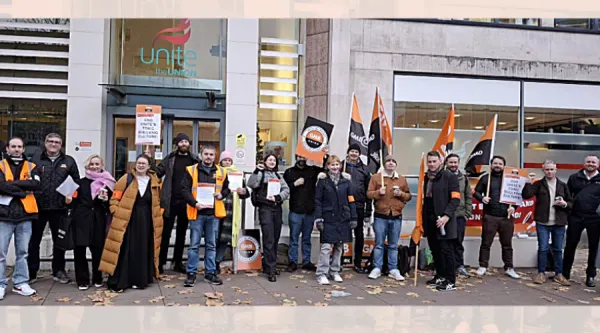
Sharon Graham has a John Terry-like tendency to associate her name and photo with the results of other people’s hard won disputes, especially on social media. Unfortunately, the tell for a dispute which Sharon actually does support tends to be photos of Organisers dispatched to tourist traps in foreign locales to take photographs with banners. Organising has been turned into a performance with Organisers as misused props. As a result we now risk losing demoralised Organisers who are as dismayed with the state of our union as the rest of us.
It was not always like this. Once being an Organiser for our union would have meant being on the frontline of new ideas and taking on the toughest disputes. Now it appears to be astroturfing a rally for a campaign long abandoned by workers themselves or holding up banners outside chip shops or estate agents. A very visible pattern of drudgery and routinism has become their order of the day.
A shared history: Organising is our common thread
Everybody who is serious about the future of our union knows that Organising is essential to achieving it. There can be no step back towards the failed servicing models of the 1980s and 1990’s. This is a settled position across our union in part because support for Organising had been the common thread which bound together our predecessor unions.
In the T&G (Transport and General Workers Union), Organising as we recognise it today emerged first in the regions in the 1980’s and 1990’s at a time when the leadership focused its renewal efforts on the limited insights of expensive consultants. The formal turn to Organising followed the election of Tony Woodley in 2003, both of which were a response to the New Labour era of union decline. With the strong encouragement of Len McCluskey, a national Organising Department was established in 2005 and was initially overseen by Jack Dromey (T&G and then Unite Deputy GS.)
As the official history of Unite shows, other predecessor unions including the Graphical, Paper and Media Union (GPMU), had been compelled to embrace Organising even earlier.[1]
Since the early 1990’s the GPMU, led by Tony Dubbins, had been looking at new strategies to rebuild following the Wapping dispute and the assault against printworkers by the combined powers of the employers, the state, who used violence, technology, work going overseas, and the growth of new industries as their weapons.
Initially the GPMU focused on member recruitment and mobilisation, but instead the union found it’s answers through strategic organising and building shop floor power which the union studied at first hand in the USA in the mid 1990s. The GPMU had also decided to employ dedicated trainee union organisers from within and outside of the union.
At this time the TUC began looking to help unions build membership. Such was the embrace of Organising by the GPMU that it led the inter-union 'New Unionism' task force of the TUC from 1996, subsequently overseeing the TUC Organising Academy in 1998 which the GPMU Deputy General Secretary chaired.
The union’s conference was also the first to formally divert resources from servicing to Organising, including the training and appointment of full time organisers, the intensive training of all existing full time officers in strategic organising, all union training course for lay reps included training on organising and building membership in non-union companies.
As a result, the GPMU expanded its membership into new areas including white collar, IT, direct mail and electronic publishing. The union also employed skilled organisers from outside of the UK. Membership grew and new recognition agreements were signed.
In our shared history strategic Organising has been internationalist from day one and the GPMU worked with unions across the world in multinational companies and provided training for unions to organise and build power.
Many unions joined the expanded inter-union 'New Unionism' taskforce of the TUC and employed trainee organisers in 1998. Those trainee organisers included in the first year - TUC General Secretary Paul Nowak, Roz Foyer STUC General Secretary, current national officials of affiliated unions, and Sharon Graham.
What does this history tell us about Organising today?
First, no one General Secretary can claim to have ‘discovered’ or personify Organising with a straight face. Second, Organising strategies are a response to changing political and industrial conditions. Organising was never supposed to be one never changing playbook. It is not some tome of biblical instructions to be dusted off and repeated like a mantra. This ignores that employers will change their own strategies in response to ours. Such is the endless arms race between capital and labour. We build for power. They try to smash it. Workers win power over critical parts of the production process. In return the employers bring in new technology to ‘innovate’ away our power. From co-bots, to AI, offshoring and austerity. So it goes. And so it shall go.
Ignoring the need to constantly evolve and adapt to industrial changes results in routineism, a disconnect from reality and ultimately failure. This is not 2005. This is not 2014. This is not 2021. In the year 2026 we face rapidly restructuring economies, the collapse of entire industries and a period of vicious industrial and political reaction. We cannot stand still and hold banners for content.
What do we do? The first step, as taken by the T&G and GPMU, is to acknowledge we have a problem. This must be followed by an assessment, carried out alongside our workplace and sector leaders, to truly understand the dynamics shaping our industries today. This means identifying the critical infrastructure and pinch-points in the new economy.
It means identifying the emerging industries and workplaces, particularly in green manufacturing and logistics, which will be power centres for the decades to come.
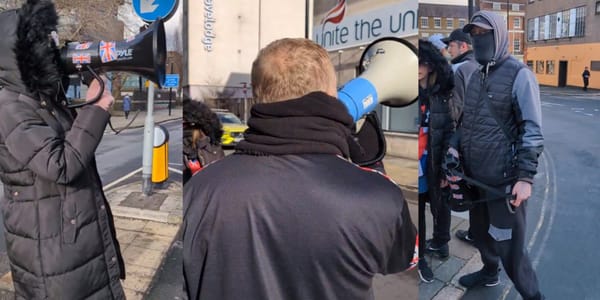
It means supporting reps and members in industries which risk being hollowed out through constant attacks on pay, the offshoring of work and site closures. It means supporting reps to reunite our workplaces being divided by the far right and to be there to defend our members under attack from their poison.
Finally, it must also mean having the confidence to realise that organising for power means power for workers, not power for individual union bureaucrats.
Our reps and our members urgently need the support of our Organisers.
The skills, talents and experience of our Organisers must be respected.
We must re-earn our place as the leading Organising union of the UK once again.
It’s time to Organise. It’s time to Reunite.
[1] Organise or Die: UNITE history 1992-2010, Volume 6, Weir, 2023